
Keeping your carpets and rugs clean doesn’t need to be hard or expensive. With a few simple tricks and the right products, you can remove stains, freshen up fibres, and keep your home looking and smelling great.
In this guide, we’ll show you the quickest and easiest ways to clean your carpets and rugs at home - from tackling everyday dirt and pet messes to dealing with stubborn stains and knowing when it’s time to call in a professional.
Regular care not only keeps your home looking its best but also helps your carpet last longer and feel softer underfoot.
Quick Summary – How to Clean Carpet
- Vacuum: Do once a week with a vacuum cleaner; go over the carpet in both directions.
- Stains: Dab blood with cold water + washing-up liquid; use enzyme cleaner or rubbing alcohol for urine/ink (test first).
- DIY clean: Treat stains, scrub gently with a broom, rinse with hot water, then go over again to dry.
- Freshen: Spray 1:2 vinegar + warm water for smells; open windows to air.
Still stuck? Book Electrodry online or call 13 27 13.
Why is it important to clean your carpet?
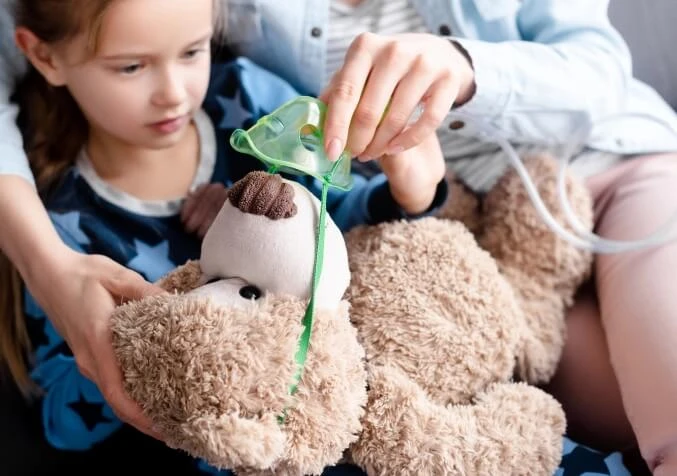
Keeping carpets and rugs clean isn’t just about appearances - it’s vital for your health and home comfort.
- Cleaner air for your family & fewer allergens and bacteria: According to the CSIRO, indoor air can be up to five times more polluted than outdoor air (source). Regular carpet cleaning helps trap and remove airborne dust, dirt, and allergens, improving indoor air quality.
- Longer carpet life: The Australian Standard recommends routine vacuuming to reduce abrasive wear (source). Grit between fibres acts like sandpaper — consistent cleaning can extend carpet life by several years.
- Fresh, odour-free living: Regular cleaning prevents moisture, spills, and pet messes from causing smells or mould growth, keeping your home comfortable and hygienic.
For best results, vacuum weekly using a beater-bar vacuum with north–south and east–west passes and a slight overlap to lift dirt from every angle.
The Most Challenging Types of Carpet Stains
There’s a lot of chemistry involved in carpet maintenance’, and whilst a lot of common stains in carpet can be removed with diluted dishwashing detergent, there are many that require specific stain removal solutions.
These are our pro tips for removing these types of stains out of carpet.
1. Blood
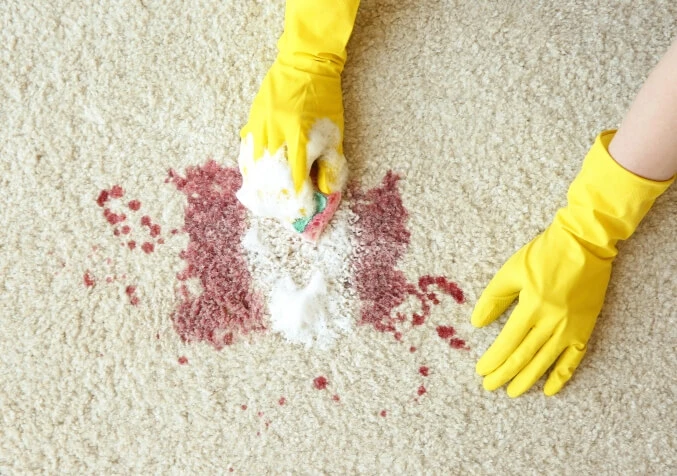
Here’s how to remove them:
- Blot immediately: Use a paper towel or a clean white cloth to absorb excess blood.
- Cold water only: Blot gently with cold water — never warm or hot — as heat will set the protein and make the stain permanent.
- Use mild detergent: Mix cold water with a few drops of dishwashing liquid, then blot again.
- Rinse and dry: Rinse with cold water and blot until dry.
- Try an enzyme remover: If the stain remains, use an enzyme-based stain remover (often sold as “Pet Stain Remover”) from your local supermarket.
For a full explanation of why blood stains are difficult and the right way to treat them, see our guide on removing blood stains from carpet.
2. Pet urine
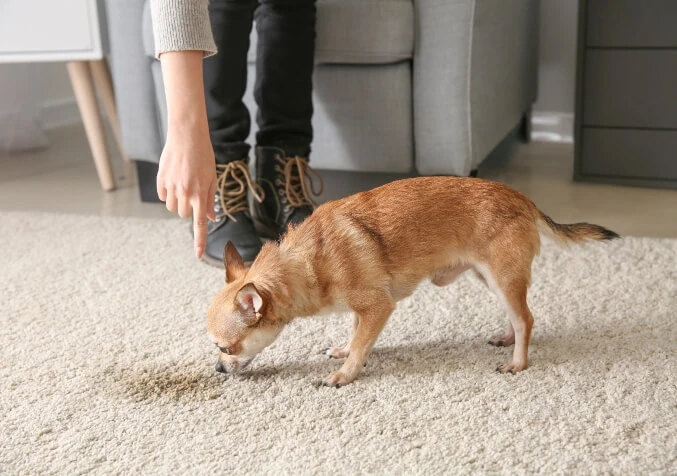
Pet accidents are common, especially on carpet. Urine changes from acidic when fresh to alkaline over time, which can bleach fibres and cause permanent damage.
To treat pet urine:
- Act quickly: The sooner you clean it, the better.
- Blot up moisture: Use paper towel or a white cloth to soak up as much urine as possible.
- Neutralise acidity: Apply a diluted dishwashing detergent solution — its mild alkalinity helps counteract fresh acidic urine.
- Rinse thoroughly: Always rinse with clean water and blot dry.
- Use enzyme cleaners carefully: Off-the-shelf enzyme removers work well for odours and stains, but don’t overuse them - too much can weaken carpet fibres.
For more detailed, step-by-step fixes, check out our guide to removing pet urine and getting rid of urine odour from carpet. - did we not just provide a step by step process here?
3. Ink

Ink is one of the hardest stains to treat because it’s designed to dye fibres permanently.
Here’s what to do:
-
Use isopropyl alcohol: Apply a small amount of rubbing alcohol (such as Isocol) to a cotton bud or a clean white cloth.
-
Blot — don’t rub: Gently blot the stain; rubbing will spread the ink further.
-
Patch test first: Always test on a hidden area first, as alcohol can affect carpet dyes.
Carpet Shampooer vs. Hot Water Extraction Cleaner
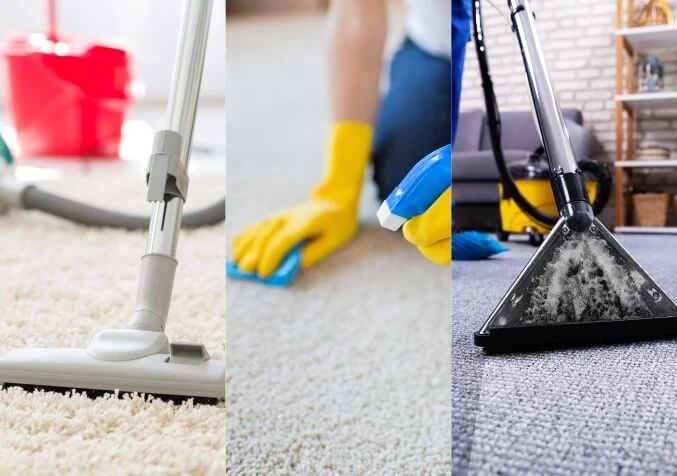
To get your carpet clean, you’ll need the right equipment. We strongly recommend a hot water extraction cleaner instead of a carpet shampooer. Here’s why:
| Feature | Carpet Shampooer | Hot Water Extraction Cleaner (Steam Cleaning) |
|---|---|---|
| How it works | Cycles a detergent or shampoo solution through the carpet, using the same liquid across the whole floor. | Injects hot water (and cleaning solution) deep into the carpet, then extracts it along with dirt and debris. |
| Cleaning effectiveness | Helps break down oily soils that hold dirt, but doesn't lift much of the grime out. | Flushes out dirt, grime, and allergens effectively — leaving carpets cleaner and fresher. |
| Residue | Often leaves shampoo residue behind, which can attract more dirt and make carpets re-soil faster. | Minimal residue when done properly — cleaner carpets stay fresh longer. |
| Moisture level | Can leave the carpet quite wet and slow to dry. | Extracts most of the water during cleaning, so carpets dry faster. |
| DIY availability | Basic shampoo machines are inexpensive and easy to find. | Hot water extraction machines are available for hire from major hardware stores and deliver a more professional result. |
| Best for | Light cleaning or freshening up older carpets. | Deep cleaning, stain removal, and maintaining long-term carpet health. |
The Carpet Cleaning Process
If you’re going to use a hot water extraction cleaning machine, we suggest following these cleaning tips:
-
Vacuum the carpet thoroughly. You’re going to inject water into the carpet so if there’s dirt in the carpet it will mix with the water to create mud, which is very hard to remove.
-
Treat the stains first. When you rent or purchase a carpet cleaning machine, you should be able to buy a spot remover solution that you can apply to the stains.
-
Spray the carpet with your general carpet cleaning solution and agitate. We suggest using a broom to agitate the cleaning solution into the carpet fibres as this will give you the best possible cleaning results.
-
Clean the carpet with your hot water extraction machine. For the best results:
-
Make sure you use hot water in the machine
-
With each pass of the carpet cleaning wand, have a 50% overlap
-
Perform a dry pass over the carpet after cleaning. This is where you use the carpet cleaning wand with the suction on, but without injecting water into the carpet. This will help remove excess moisture to assist drying and give a better carpet cleaning result.
-
How to Clean A Rug
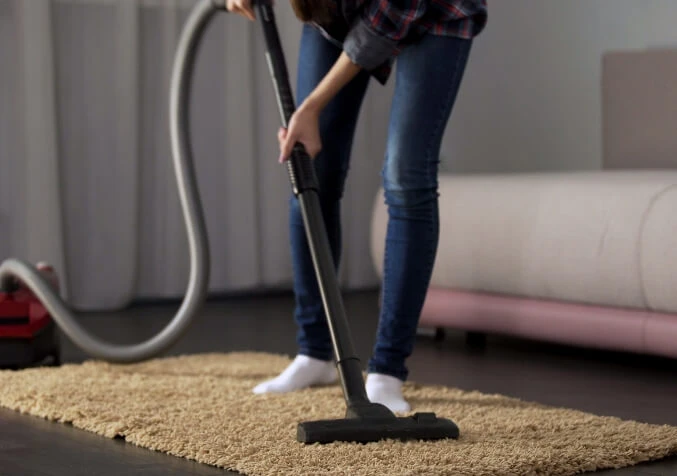
Hot water extraction cleaning is usually the best DIY method for cleaning a rug, however the key to effective cleaning is to remove as much dirt and debris as possible.
We have 2 suggestions to get the best possible rug cleaning results:
-
Vacuum the front and back of the rug. When you finish vacuuming the front of the rug, turn it over and vacuum the back. If you have a high-quality vacuum with a beater bar, it will dislodge the dirt from the rug fibres, with the dirt landing on the floor. It will usually take 5 mins of vacuuming on a 6 sqm rug to get the best possible result.
-
Place the rug over a railing or beam and beat it with a stick, then stand back and watch the dirt and dust fall out. This is the way rugs were cleaned by our grandparents and it’s just as effective today. Keep in mind it can be hard to find somewhere to hang the rug safely.
Once you’ve removed as much dry soil and dirt as possible, we suggest cleaning with a hot water extraction cleaner, following the steps above. Not all rugs are suitable for hot water extraction cleaning, so we recommend checking the cleaning instructions first.
How to Remove Carpet Odours
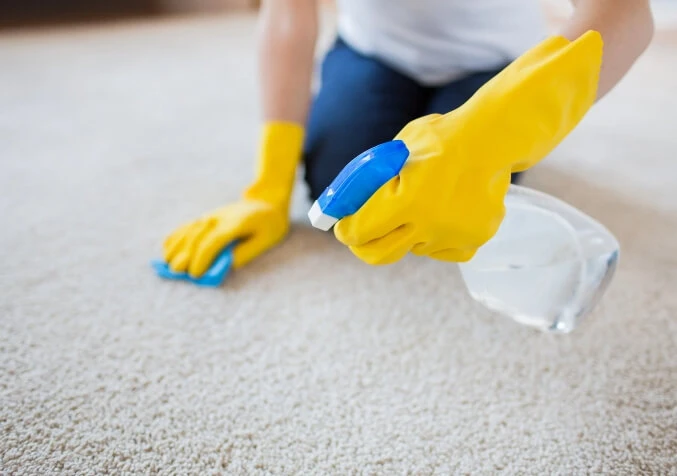
Got a pongy carpet? Follow these quick steps to banish smells and keep it fresh:
-
Step 1 – Identify the cause: Work out what’s behind the odour — pets, spills, or dampness. Treating the source is more effective than masking the smell.
-
Step 2 – Vacuum thoroughly: Use a HEPA-filter vacuum to lift dust and debris that trap odours.
-
Step 3 – Apply a deodoriser: Use a store-bought carpet deodoriser; sprinkle or spray evenly, let it sit, then vacuum again. Enzyme products work best for pet smells, while bicarb soda helps neutralise general odours.
-
Step 4 – Treat musty or mouldy smells: Mix one part white vinegar with two parts warm water, lightly mist the carpet, and allow it to dry completely with good airflow. The vinegar scent fades as it dries but helps kill mould spores.
-
Step 5 – Prevent odours returning: Keep carpets dry, clean spills promptly, air rooms regularly, and consider professional cleaning if smells persist.
What can go wrong with DIY carpet cleaning?
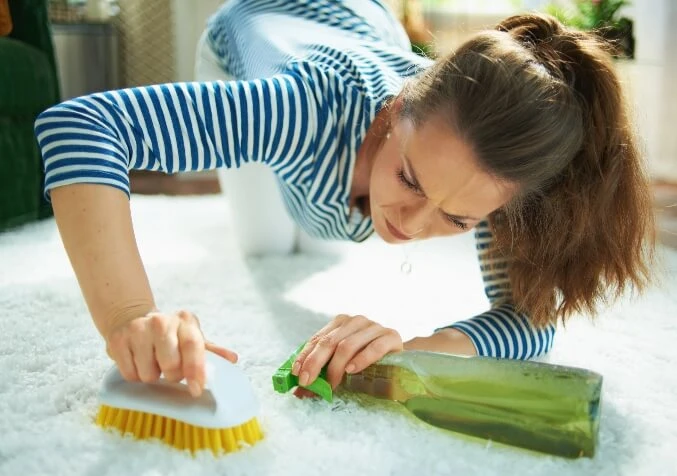
The 3 Biggest Issues with DIY Carpet Cleaning
-
The cleaning equipment isn’t powerful enough to effectively clean your carpet
-
The carpet is left too wet. This is usually because the vacuum in the machine isn’t powerful enough
-
The cleaning solutions are not effective enough to do the required job.
DIY carpet cleaning machines that can be rented from a hardware store are much less powerful than the machines the professional cleaners use. You’ll also find that the cleaning solutions aren’t’ usually as effective. This means that if you’re going to clean your carpet yourself you need to allow for a lot of time for repeated cleaning to get the result you’re happy with.
Should you hire a professional carpet cleaning service?
If you're exceptionally gifted at house cleaning and organising or removing stains, you might wonder whether you can get away with cleaning your carpets yourself. If you follow the above steps, you should do a pretty decent job at maintaining your carpets. However, carpets are an investment, and so is the cleaning process.
If you hire a professional carpet cleaning service like Electrodry, you can access specialist cleaning solutions to handle the toughest stains. Our carpet dry cleaning service can remove many more stains and smells than traditional steam cleaners, so you enjoy cleaner carpets for longer and leave your carpet looking their best.
We also provide pest control, hard floor refinishing, and upholstery cleaning services to keep your home looking and feeling great. So, why not contact us now to see how we can help you keep your carpets and rugs in the best condition possible.
