
When it comes to carpet spills, timing matters. The sooner you act, the better your chances of avoiding permanent staining.
This homemade solution uses ingredients most homes already have and works well for light, everyday stains.
Quick Summary – Natural DIY Carpet Spray
- Mix: 1 cup vinegar + 2 cups water + 2 tsp salt + 15 drops lavender oil.
- Blot: Gently blot fresh stains. Avoid scrubbing to prevent fibre damage
- Apply: Spray generously and brush in one direction, then the other.
- Finish: Let dry fully, then vacuum to lift residue and reset fibres.
For a deeper clean or tougher stains, a professional clean may be needed.
Need a deeper clean for your carpet? Book Electrodry carpet cleaning online or call 13 27 13.
How to Make a Homemade Carpet Cleaning Solution
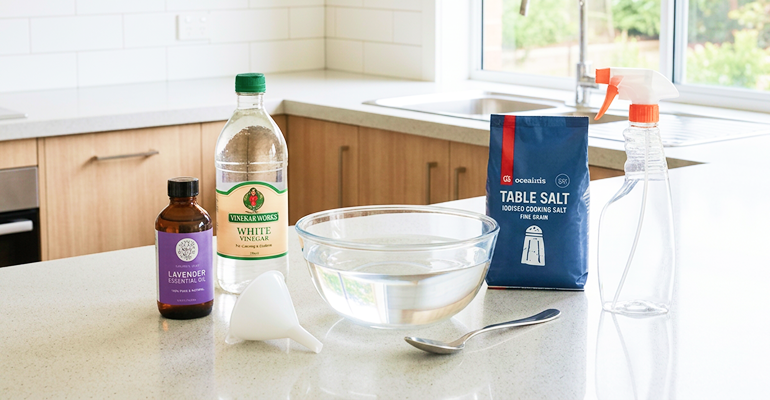
Ingredients
-
1 cup of white vinegar
-
2 cups of water
-
2 teaspoons of salt
-
15 drops of lavender essential oil
Instructions
- In a spray bottle, combine 1 cup of white vinegar and 2 cups of water, followed by 2 teaspoons of salt and 15 drops of lavender essential oil. Shake well to mix.
- Shake for 20–30 seconds until the salt dissolves and the liquid is mostly clear. If any grains remain, add a small amount of warm water and shake again.
- Label the bottle clearly and keep the 1:2 vinegar-to-water ratio if you scale the recipe.
Before using, set the nozzle to a fine mist and patch test on a hidden area. Lightly spray, wait a few minutes, then blot with a clean white cloth. Stop if you notice any colour transfer or fibre change.
For spot cleaning, mist lightly, leave for 3–5 minutes, then blot with a clean cloth. Avoid soaking the carpet, as excess moisture can reach the backing or underlay.
Store the solution sealed and out of reach of children and pets. Do not use on wool, silk, sisal, or jute, and never mix with bleach or ammonia.
How to clean carpets with a homemade carpet cleaning solution
1. Blot fresh spills

Use a paper towel or clean white cloth to blot the spill and absorb as much liquid as possible. Apply gentle downward pressure and avoid scrubbing, as this can push the stain deeper into the fibres.
2. Apply the solution

Spray the solution generously over the stained area, then brush the fibres in one direction. Reapply and brush in the opposite direction to help lift the stain.
Shake the bottle between sprays to keep the mixture consistent.
3. Let dry and vacuum

Allow the carpet to dry completely, then vacuum the area to remove any residue and restore the texture of the fibres.
For more stubborn stains, you can repeat the process once the carpet is dry.
Things to note before using a homemade solution
- Check your carpet type: Wool and natural fibres need gentler treatment than synthetic carpets
- Patch test first: Always test on a hidden area to check for colour changes
- Don’t mix chemicals: Never combine vinegar with bleach or ammonia
- Ensure ventilation: Keep the area well ventilated while cleaning and drying
Common carpet stains and how to treat them
If a stain is still visible after cleaning, it may need a more targeted approach. Different stains respond to different treatments.
| Stain Type | Cleaning Solution | How to Treat | Extra Tips |
|---|---|---|---|
| Grease or oil | Rubbing alcohol (e.g. Isocol) | Blot with a clean cloth to lift the residue | Use sparingly and test on a hidden area first |
| Food or drink | Dishwashing liquid + warm water | Blot the area and repeat as needed | Avoid hot water, as it can set the stain |
| Pet stains | Vinegar solution + bicarb soda | Apply vinegar first, then bicarb after drying | Helps neutralise odours |
| Mud or dirt | Vacuum | Let it dry completely, then vacuum before cleaning | Avoid wiping wet mud, as it can spread |
| Ink | Rubbing alcohol (e.g. Isocol) | Dab gently using a clean white cloth | Do not rub, as this can spread the ink |
| Make-up or nail polish | Rubbing alcohol or non-acetone remover | Blot carefully using small amounts | Test first and use sparingly |
Additional tips and when to call a professional
- Always patch test first before full application
- Use cleaning solutions sparingly to avoid soaking the underlay
- Ensure good airflow to help the carpet dry properly
If the stain still won’t come out, or if it has set into the carpet, it may require professional treatment. Some stains can penetrate deeper into the fibres or underlay, making them harder to remove with household methods.
Homemade solutions can be useful for light stains, but acting quickly and using the right method makes all the difference.
